E250S
preferred- Power
- 250 W
- Nominal at 30 m
- 111 dB
- Horns
- 2
- Batteries
- 2 x 28 Ah
- Median
- 109.8 dB
- Average
- 109.19 dB
- Max
- 111.8 dB
- Min
- 104.9 dB
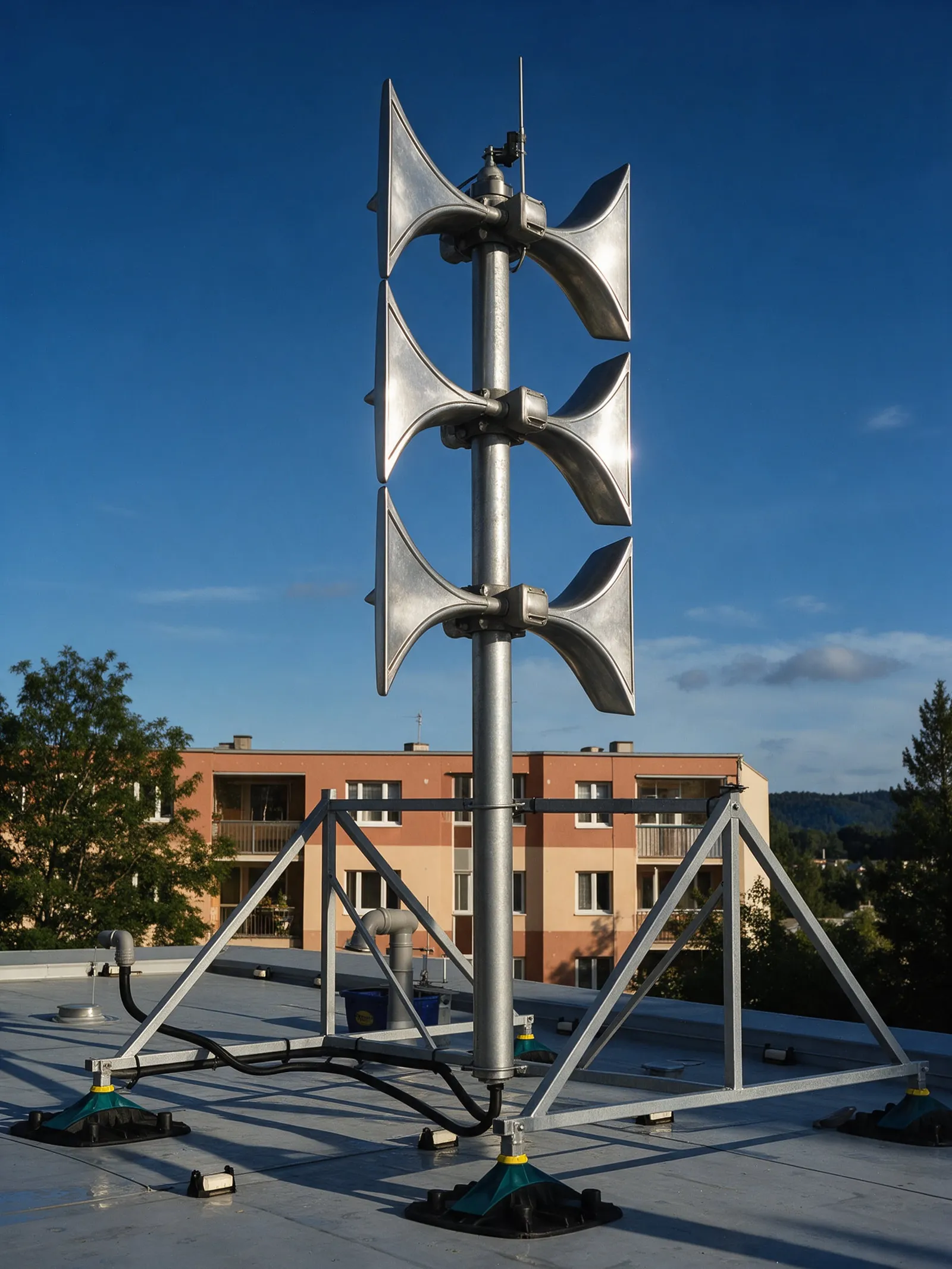
An electronic replacement for old high-power motor-driven sirens — hence the name. The control box is simple: keypad and LCD sit directly on the motherboard, and the siren is meant to be controlled from outside, by binary input, RS-232 or radio. Every size is built from the same modules.
115 dB(A)
at 30 metres from the most common 500 W size — two amplifiers, four horns.
250–1,500 W
five sizes, 2 to 12 horns, 2 or 4 amplifiers, two cabinet sizes.
2 × 12 V
the siren always runs from its two batteries; mains or a solar panel only charge them.
The datasheet puts it in one sentence: “When comparing the acoustic pressure at 30 m the eRotor 500 W has the same results as a common 1200 W electronic siren!” The reasons are a unique signal processor, a separated power supply and thick aluminium horns; the result is a lighter horn construction and more reasonable costs for the siren and its installation.
+2–3 dB(A)
more at 30 metres than comparable sirens, in certified comparative measurements, A-weighted. The acoustic report adds a direction chart for every configuration: LpAeq in dB(A), measured at 30 m in 24 directions at 15° steps.
115 dB(A)
eRotor 500 W at 30 m — two amplifiers, four horns.
115 dB(A)
Common 1,200 W electronic siren at 30 m — the datasheet comparison.
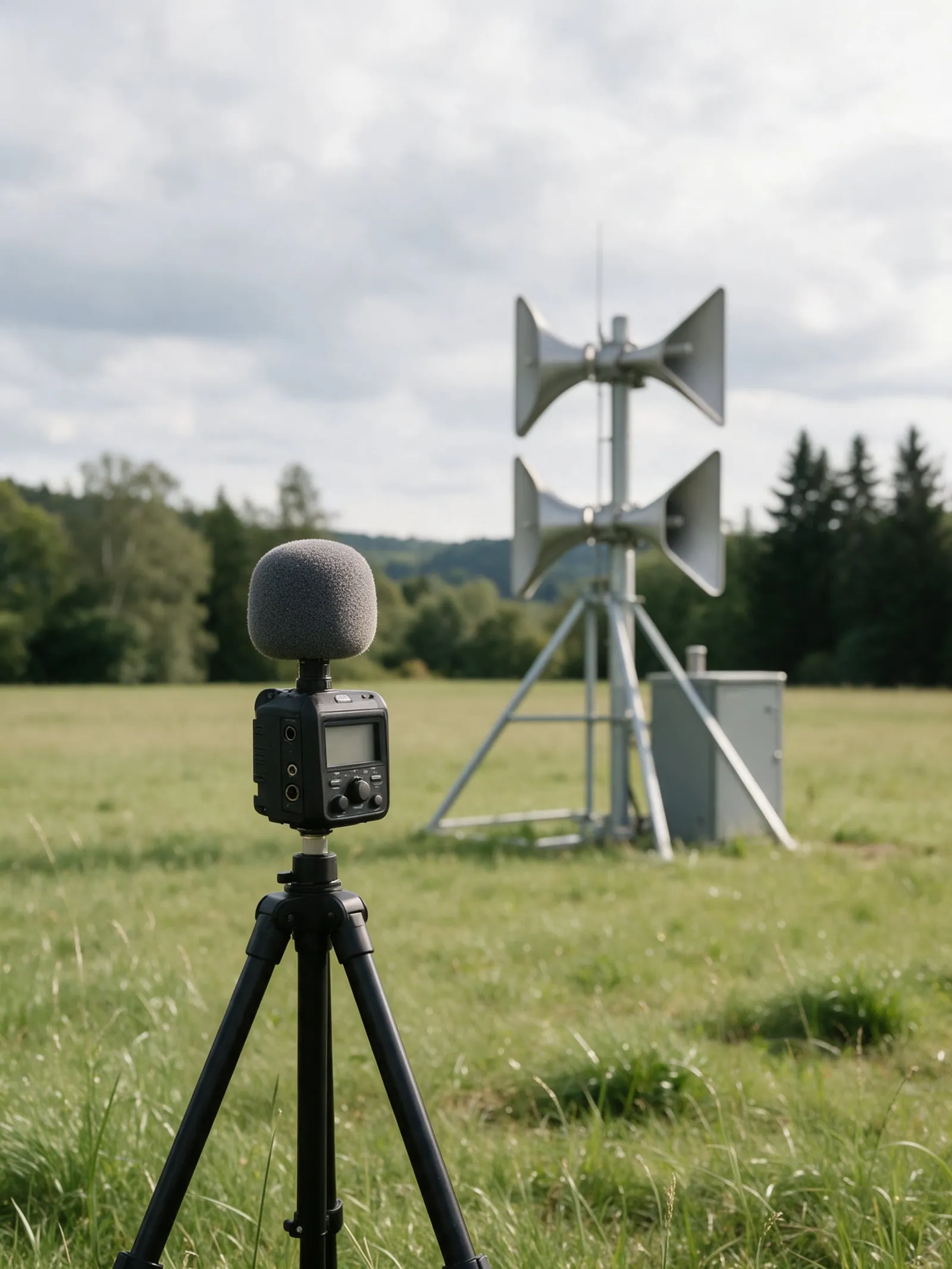
The same level at 30 m from a smaller siren.
Fewer watts for the same coverage.
Less battery capacity for the same alarm and standby times.
Fewer horns need a shorter, lighter mast.
Less weight on the roof, less cabling to the horns.
Fewer cast aluminium horns — the heavy part of every siren.
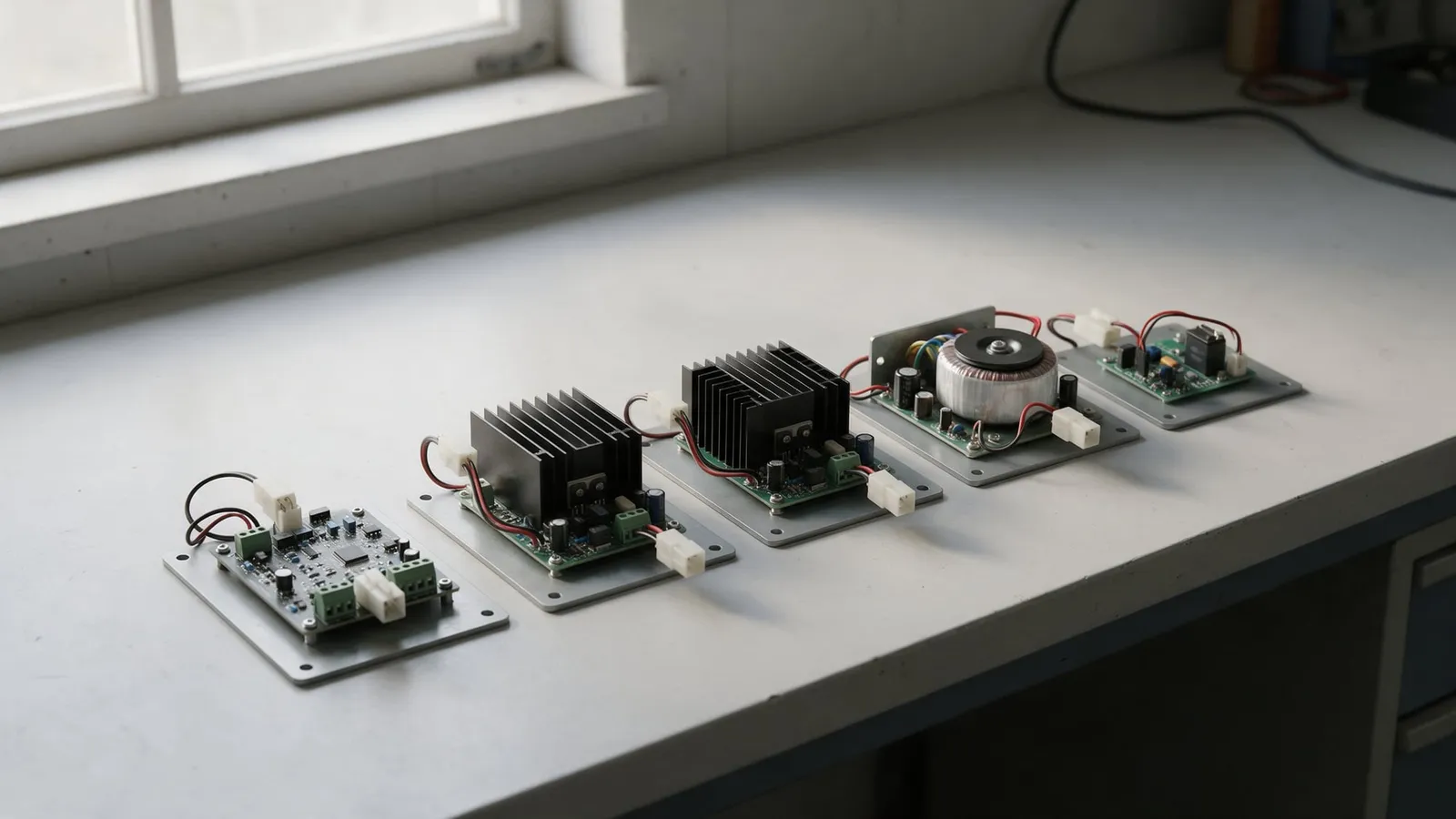
The electronics sit in one cabinet with a service power plug, indoors or in a protected enclosure; optional modules — radio, POCSAG, RDS or GSM — go in the same cabinet. The horns go on a 114 mm steel mast tube prepared by the customer. A siren typically has four to eight modules; replace one module during service instead of the whole siren.
The motherboard with keypad and LCD directly on it. Generates the signal, stores customisable tones on an MMC memory card, takes voice on an AUX input and runs the self-test.
Keypad + LCD · MMC card · AUX input
A separate module fed from 230 V AC (115 V AC), kept away from the control unit so that currents do not disturb the signal.
230 V AC (115 V AC)
Tausec’s own 375 W amplifiers — three 125 W channels each — always in pairs, so the siren plays in stereo. Two per siren up to 750 W, four from 1,000 W.
375 W each · 2 or 4 per siren
Charges the two 12 V batteries the siren runs from, continuously from mains or solar. Battery voltage is part of the self-test.
2 × 12 V, 24–65 Ah
Cast aluminium alloy horns with pressure drivers, driven in 125 W pairs. Two horns at 250 W, twelve at 1,500 W.
125 W pairs · 2–12 horns
The complete table from the eRotor datasheet. Choose the size by the area to cover; the modules, software and documentation are the same for all five.
| eRotor | 250 W | 500 W | 750 W | 1,000 W | 1,500 W |
|---|---|---|---|---|---|
| Sound level at 30 m | 110 dB(A) | 115 dB(A) | 117 dB(A) | 119 dB(A) | 121 dB(A) |
| Horns | 2 | 4 | 6 | 8 | 12 |
| Amplifiers (375 W each) | 2 | 2 | 2 | 4 | 4 |
| Cabinet weight incl. batteries | 38 kg | 50 kg | 50 kg | 70 kg | 70 kg |
| Cabinet dimensions (mm) | 800×600×250 | 800×600×250 | 800×600×250 | 800×1000×350 | 800×1000×350 |
| Horns with drivers | 27 kg | 54 kg | 80 kg | 108 kg | 165 kg |
The most common configuration is 500 W: two amplifiers, four horns, 115 dB(A) at 30 metres. The 750 W size runs six horns from the same two amplifiers.
Full datasheet (PDF)The acoustic report lists 13 siren types across the five power levels and gives each one a direction chart: the sound pressure level LpAeq in dB(A) measured at 30 m in 24 directions at 15° steps, with median, average, maximum and minimum. This is the overview table from the report.
| Siren type | Power | Nominal level at 30 m | Horns | Batteries | Mast length | Horn weight |
|---|---|---|---|---|---|---|
| E250S* | 250 W | 111 dB | 2 | 2 × 28 Ah | 1,120 mm | 42 kg |
| E250AS | 250 W | 114 dB | 2 | 2 × 28 Ah | 1,120 mm | 42 kg |
| E500D* | 500 W | 113 dB | 4 | 2 × 42 Ah | 1,120 mm | 80 kg |
| E500S | 500 W | 116 dB | 4 | 2 × 42 Ah | 1,620 mm | 84 kg |
| E500AS | 500 W | 118 dB | 4 | 2 × 42 Ah | 1,620 mm | 84 kg |
| E750S* | 750 W | 118 dB | 6 | 2 × 42 Ah | 2,120 mm | 135 kg |
| E750AS | 750 W | 120 dB | 6 | 2 × 42 Ah | 2,120 mm | 135 kg |
| E1000D* | 1,000 W | 120 dB | 8 | 2 × 65 Ah | 1,980 mm | 180 kg |
| E1000S | 1,000 W | 121 dB | 8 | 2 × 65 Ah | 2,620 mm | 180 kg |
| E1000AS | 1,000 W | 122 dB | 8 | 2 × 65 Ah | 2,620 mm | 180 kg |
| E1500D* | 1,500 W | 122 dB | 12 | 2 × 65 Ah | 2,700 mm | 260 kg |
| E1500S | 1,500 W | 123 dB | 12 | 2 × 65 Ah | 3,920 mm | 265 kg |
| E1500AS | 1,500 W | 124 dB | 12 | 2 × 65 Ah | 3,920 mm | 265 kg |
* These siren configurations are preferred due to better static load values.
D, S and AS are the type designations used in the report. The report states its own nominal levels and horn weights for these specific configurations, which differ from the datasheet table above; both are reproduced as published. The 24 measured values for each type are in the report.
Acoustic report (PDF)For every siren type the report plots the sound pressure level LpAeq in dB(A) measured at 30 m in 24 directions at 15° steps, with the median, average, maximum and minimum. These are the 13 charts from the report, redrawn from its values.
Direction chart not reproduced; see the overview table.
Measured averages are often below the nominal level of the type; the nominal levels are the rated figures from the report’s overview table above.
Acoustic report (PDF)The 2–3 dB(A) advantage comes from how the electronics are built, not from a tuning trick.
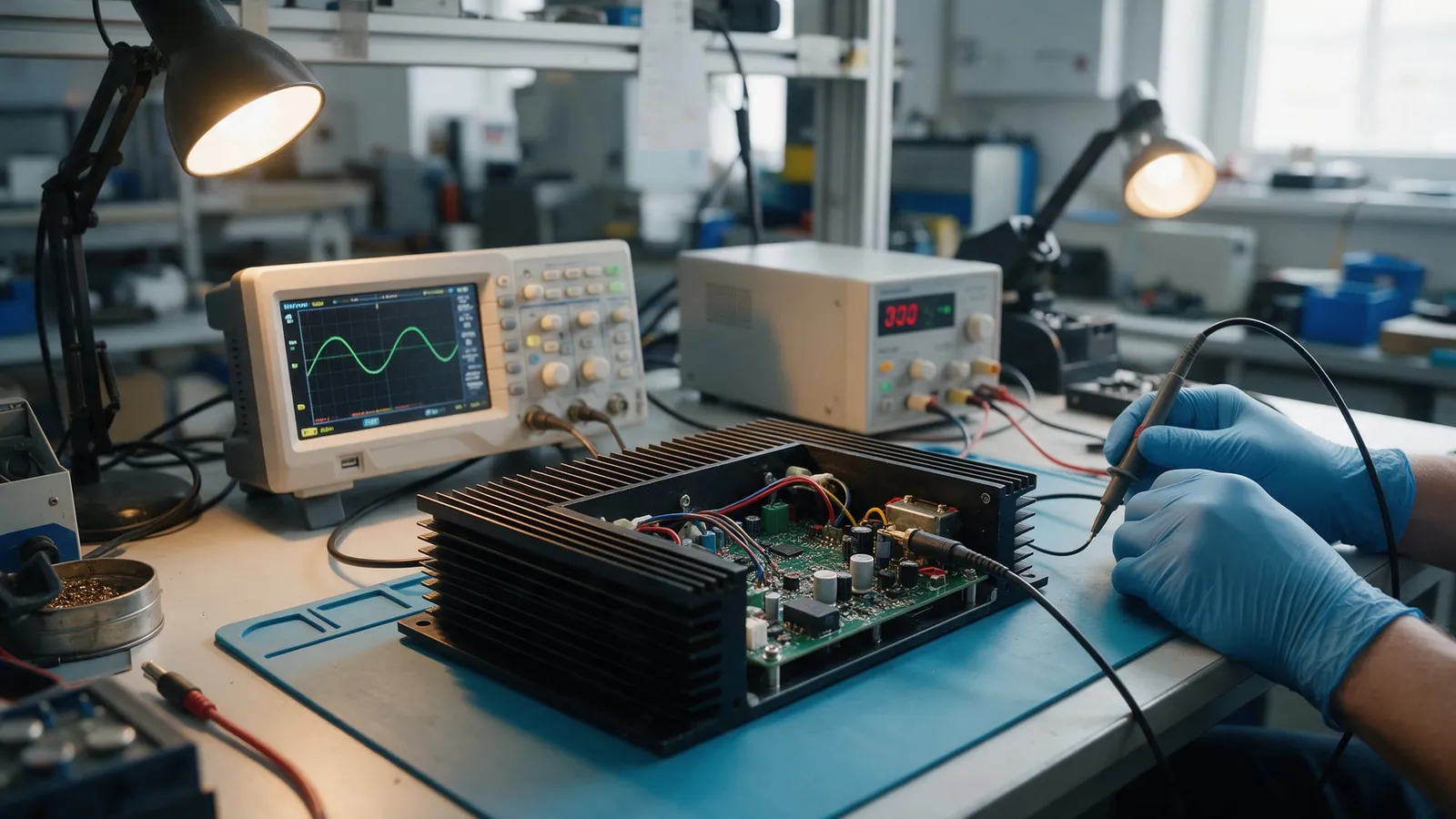
Most high-power sirens use class D amplifiers. eRotor uses class B: a cleaner signal and a failure rate far lower in practice. An integrated thermal fuse shuts an amplifier down before it overheats.
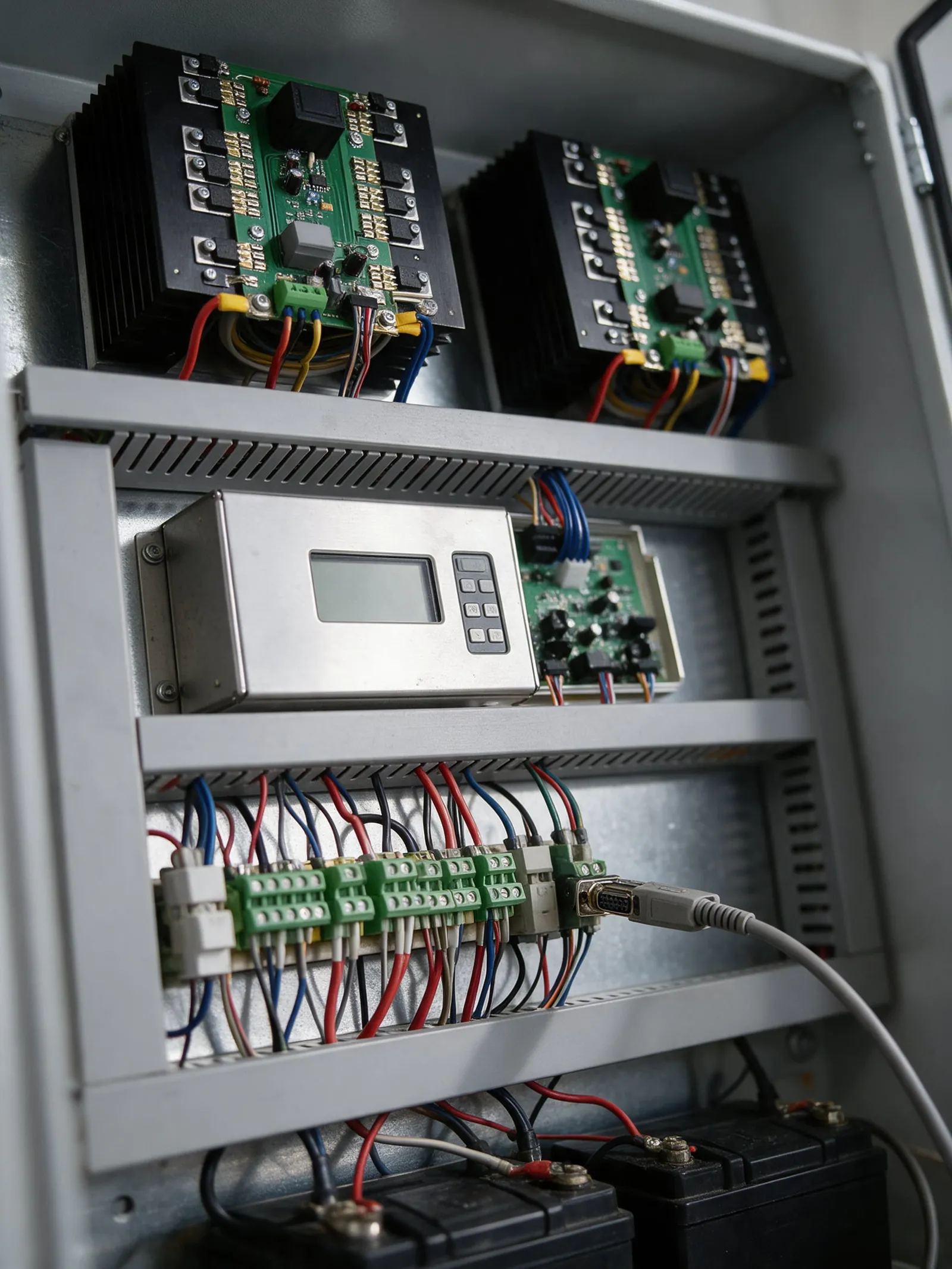
The power supply is its own module. The high currents of the amplifiers never reach the control unit that generates the signal, so the signal stays clean.
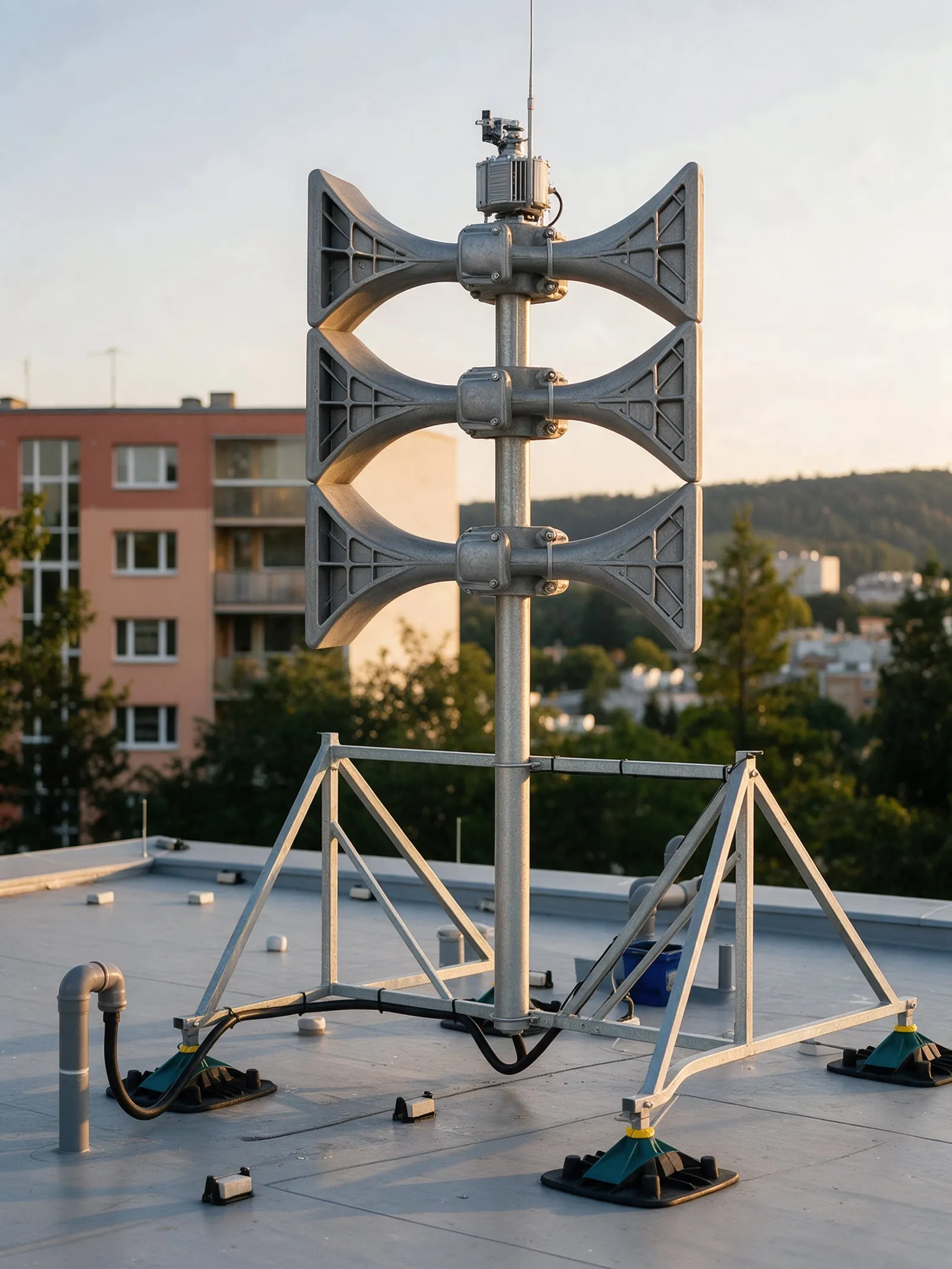
Left and right horns receive signals shifted by a few hertz and in phase, so the sound waves add up instead of cancelling out. The drivers sit protected inside the cast horns, which do not rust or degrade.
15 min
At least 15 minutes of alarm from the two 12 V batteries, at any size.
72 h
At least 72 hours of operation without mains, charged beforehand from mains or solar.
1 week+
More than a week on standby when the grid fails — usually the first thing to go in a crisis.
25+ years
Cast aluminium alloy horns withstand heat, frost and salt air without rusting or losing their acoustic properties.
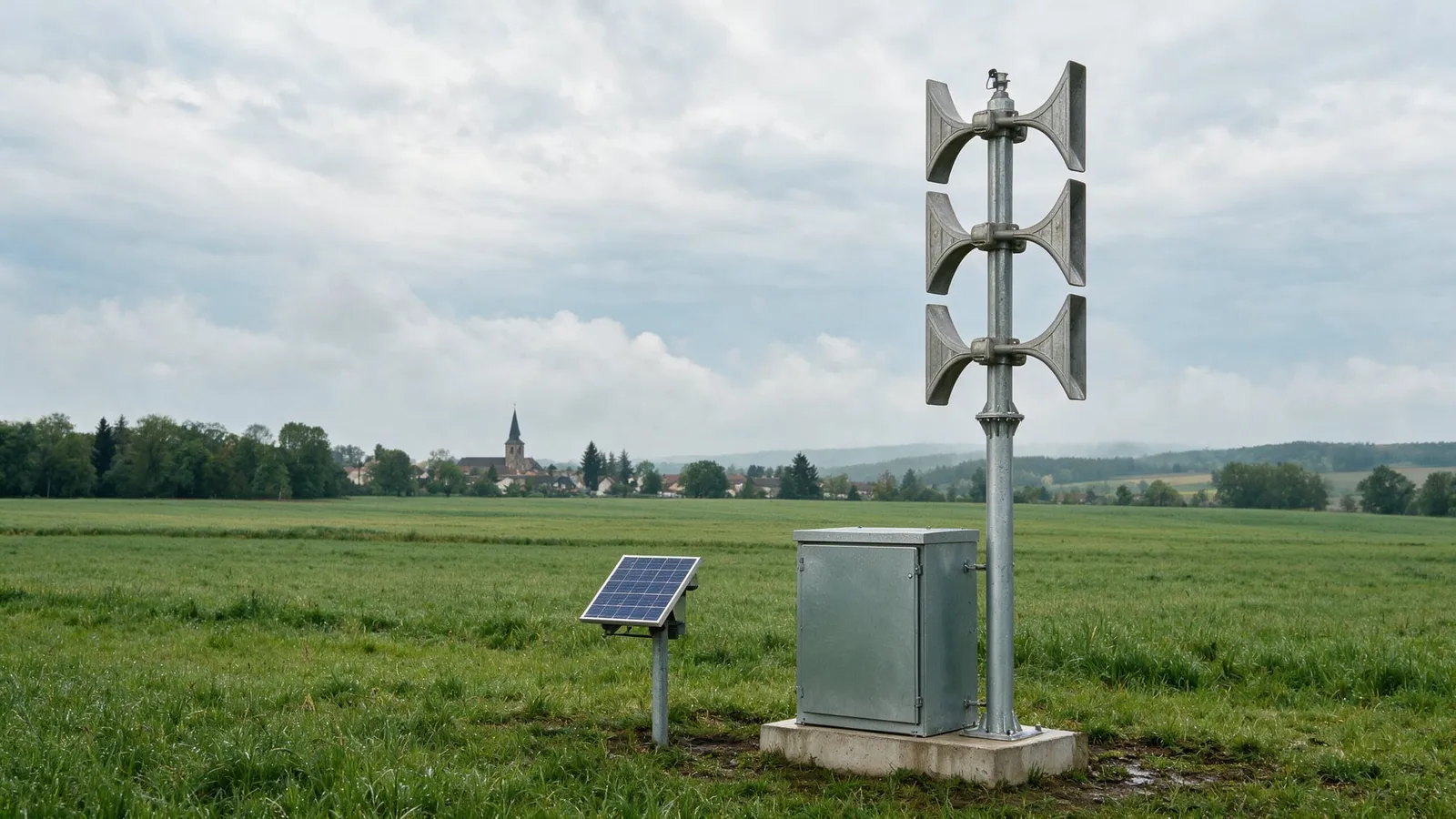
The siren never runs from mains directly: mains or a solar panel charge the two 12 V batteries, and the batteries drive the amplifiers. The cabinet goes indoors or in a protected enclosure out of direct sun; the horns go on the mast.
A yearly check by the local partner. Batteries are replaced every 3–4 years, pressure drivers when worn; heating or cooling for the cabinet on extreme sites is arranged by the partner. Replace a module, not the siren.
The datasheet and the acoustic report are public. Installation instructions, the configuration software and the price list go to partners.
Five sizes with sound level at 30 m, horns, amplifiers, weights and dimensions, power supply, control inputs and self-test.
13 configurations with nominal level, mast length, batteries and horn weight, and a direction chart with 24 measured values for each.
Delivered to partners with the first order. All documents, public and on request, are on the Downloads page.
By the area you need to cover and the local rules for warning. 500 W — two amplifiers, four horns, 115 dB(A) at 30 m — is what most partners order. 250 W covers a small site with two horns; 1,500 W with twelve horns and four amplifiers reaches 121 dB(A) for wide, open areas. Send us the site and we recommend a configuration.
Two ways. The acoustic report measures each of the 13 configurations at 30 m in 24 directions at 15° steps, as LpAeq in dB(A), and gives the median, average, maximum and minimum for every type. The 2–3 dB(A) advantage comes from certified comparative measurements against comparable sirens at the same distance.
The datasheet compares the acoustic pressure at 30 m: a 500 W eRotor and a common 1,200 W electronic siren both give 115 dB(A). The reasons are the signal processor, the separated power supply and the thick aluminium horns.
At least 15 minutes of alarm and at least 72 hours without mains, and more than a week on standby, from two 12 V batteries of 24–65 Ah. The batteries are charged continuously from mains or from a solar panel the customer connects.
Up to four. A 500 W siren runs four horns from two amplifiers; the same two amplifiers can also drive six horns, three per side, as in the 750 W size. From 1,000 W upwards the siren uses four amplifiers.
No. eRotor always runs from its two 12 V batteries; mains or solar power only charges them. That is why a grid failure does not stop the siren.
Indoors or in a protected enclosure, out of direct sun; only the horns go outside on the mast. If a site needs heating or cooling for the cabinet, the local partner arranges it as part of the installation. The cast aluminium horns withstand heat, frost and salt air.
eRotor is CE certified. Certification required by national rules in your country is arranged by the local partner, who knows the procedure and the authorities.
Alarm tones are customisable and stored on an MMC memory card in the control unit. Recorded voice messages are uploaded with the Windows configuration software over RS-232, and an AUX input takes live or external audio.
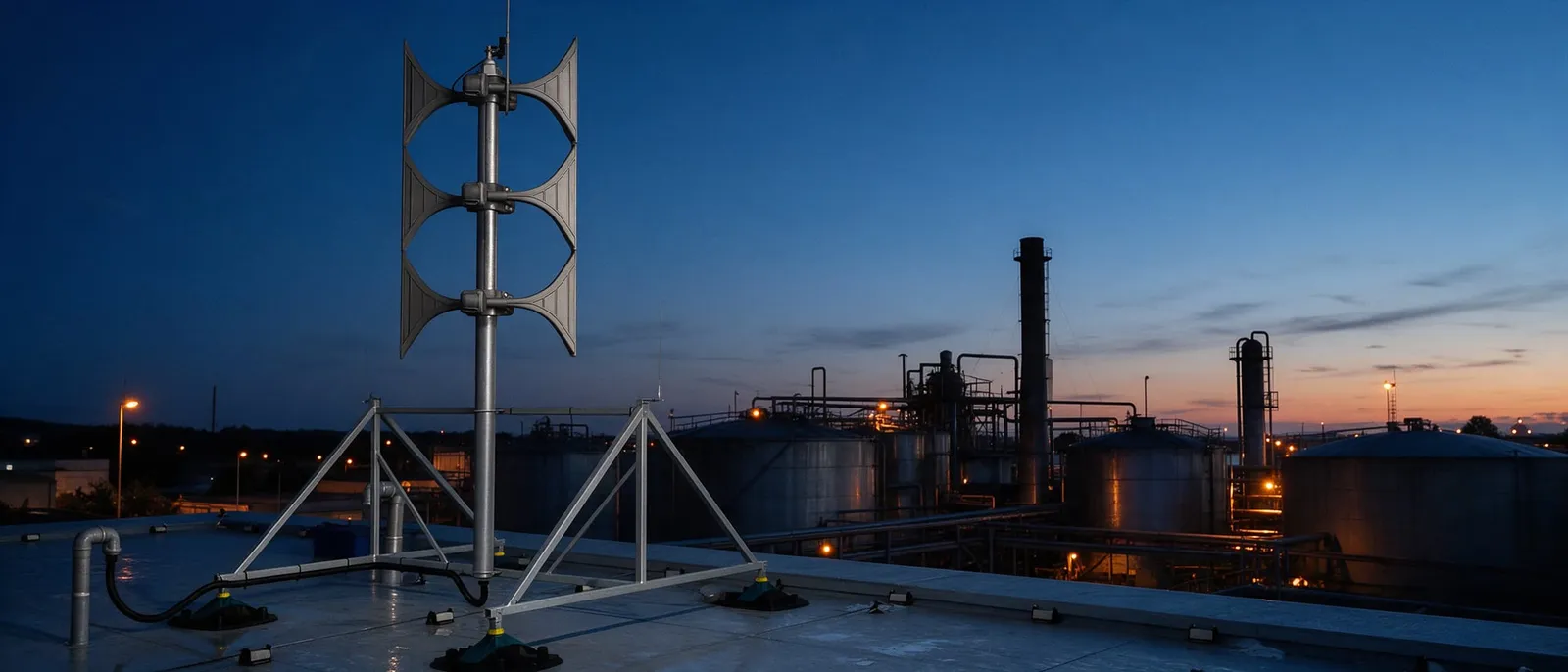
Tell us the application, the area to cover and how you plan to trigger the sirens. You will receive a recommended size, documentation and pricing.